
Is Fractional Laser Suitable for Melasma and Pigmentation — and Can It Make Them Worse?
Oct 06, 2026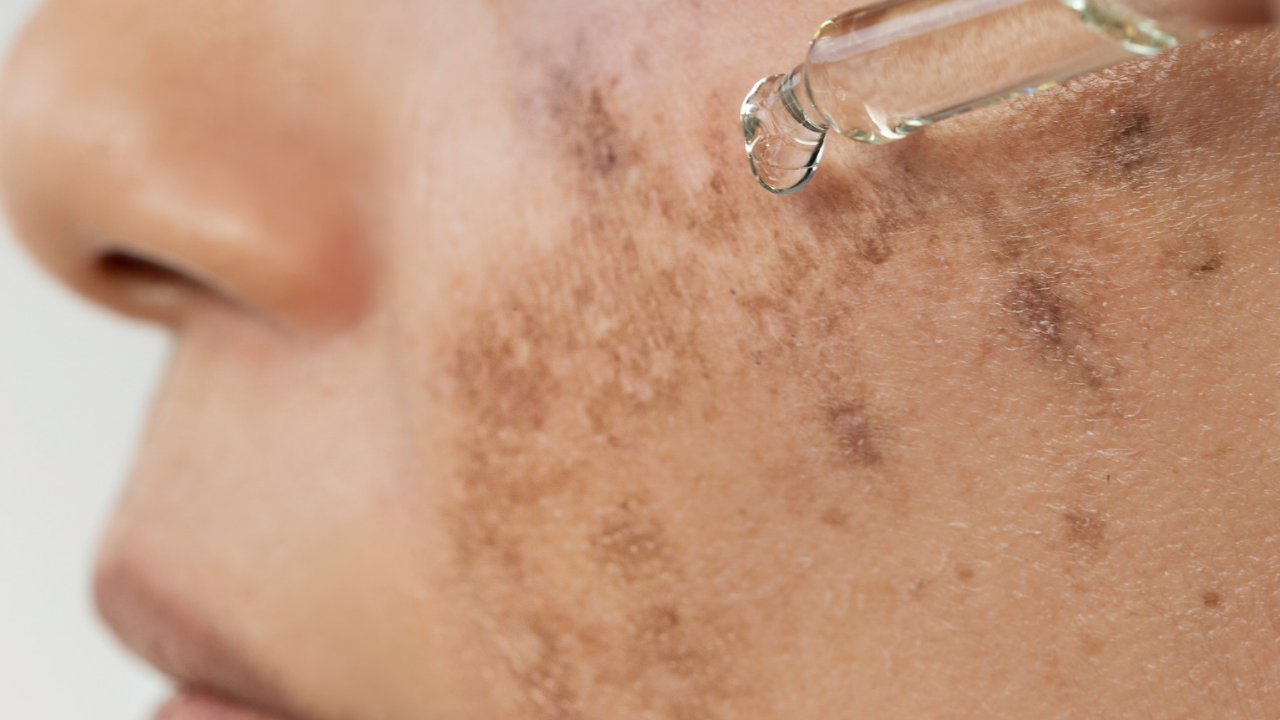
Is Fractional Laser Suitable for Melasma and Pigmentation — and Can It Make Them Worse?
When dark patches appear on the face, laser treatment may seem like an obvious solution: if excess pigment is present, why not use a laser to remove it?
Pigmentation treatment is more complicated than that, particularly when the diagnosis is melasma.
Fractional laser can have a role in selected patients, but it is not automatically the first or best treatment for everyone with melasma or facial pigmentation.
In some patients, inflammation caused by the procedure can actually increase pigmentation rather than reduce it.
First, Are All Pigmentation Problems the Same?
No.
Melasma differs from post-inflammatory hyperpigmentation, and both differ from certain forms of sun-induced pigmentation.
The diagnosis should therefore be established before selecting a device.
Read first: Melasma vs Hyperpigmentation — What Is the Difference?
How Does Fractional Laser Work?
Fractional laser creates microscopic treatment zones separated by areas of untreated skin.
Its biological effect varies considerably depending on the laser type, wavelength, depth, density and energy used.
Fractional Erbium laser, for example, targets water in tissue and can be used for resurfacing at different treatment intensities.
The word “fractional” alone therefore does not fully describe the treatment.
Can Fractional Laser Treat Melasma?
Certain fractional technologies may be incorporated into treatment plans for selected cases, including some patients with melasma that has not responded adequately to more conventional management.
This does not mean laser should be the starting point for every patient.
Melasma is prone to recurrence, and excessive inflammation or heat may worsen pigmentation in susceptible individuals.
Potential improvement must therefore be balanced against the possibility of recurrence or treatment-induced worsening.
Why Can Pigmentation Become Worse After Laser?
Laser treatment produces an inflammatory response, the degree of which varies according to the technology and treatment parameters.
In patients susceptible to post-inflammatory hyperpigmentation, this inflammatory response can stimulate melanogenesis and lead to darker areas after treatment.
This risk deserves particular consideration in more melanated skin types and when treatment intensity exceeds what is appropriate for the individual patient.
Does Darker Skin Mean Fractional Laser Cannot Be Used?
No single rule is that simple.
Skin type does not automatically prohibit treatment, but it affects risk assessment, device and parameter selection, preparation and post-treatment care.
The treatment should be adapted to the patient rather than applying identical settings to every skin type.
Is Erbium Better Than CO2 for Melasma?
Neither should be considered universally “best for melasma.”
Fractional Erbium and fractional CO2 have different ablative and thermal characteristics.
In a patient with melasma, however, device selection is not based only on the degree of resurfacing. Inflammation, thermal injury, skin type and the risk of post-inflammatory pigmentation also matter.
Read the comparison: Fractional Erbium vs Fractional CO2
Can Laser Be Used Alone for Melasma?
Thinking of melasma as a problem that simply requires a device session is often inadequate.
Photoprotection, appropriate topical treatment and control of relevant triggers may all form important parts of management.
A device may be incorporated into a broader strategy in selected cases rather than necessarily being used as a stand-alone treatment.
Does the Skin Need Preparation Before Fractional Laser?
That depends on skin type, diagnosis and the planned procedure.
In selected cases, the physician may use a pre-treatment strategy to stabilize pigmentation or reduce certain risks before performing a procedure.
There is no single preparation protocol appropriate for every patient.
What About Aftercare?
Aftercare is important for minimizing unnecessary inflammation and supporting the recovering skin barrier.
General principles often include gentle cleansing, barrier support, avoiding picking or prematurely removing peeling skin and careful photoprotection.
Strong active ingredients and exfoliants should not be restarted before the skin has appropriately recovered.
Read more: Fractional Laser Aftercare
When Does Post-Inflammatory Hyperpigmentation Appear?
Pigmentation may not necessarily be visible immediately after treatment.
As the initial redness and peeling settle, darker areas may become noticeable in susceptible patients.
The end of the initial redness therefore does not mean the risk period has completely passed.
Does Higher Energy Produce Better Pigmentation Results?
Not necessarily.
Increasing treatment intensity may increase the tissue effect, but it can also increase inflammation, downtime and the potential for complications.
With pigmentation, balancing efficacy against inflammatory risk is particularly important.
Can Fractional Laser Be Combined with Other Treatments?
Combination treatment can be appropriate in selected cases, particularly when pigmentation exists together with another concern such as scarring or textural damage.
However, the order and timing of treatments should be individualized according to skin condition and response.
Who Is a Suitable Candidate?
Suitability cannot be determined simply by the presence of dark patches.
The diagnosis, skin type, activity of melasma, history of post-inflammatory hyperpigmentation, sun exposure, previous treatments and the actual objective of laser treatment should all be assessed.
The Bottom Line
Fractional laser can be a useful tool for selected skin and pigmentation concerns, but it is not a universal solution for melasma.
With melasma in particular, a more aggressive treatment is not automatically a better treatment.
The objective is to improve pigmentation without triggering inflammation that leads to recurrence or worsening.
Appropriate diagnosis and individual risk assessment should therefore come before device selection.
Related Articles
Melasma vs Hyperpigmentation: What Is the Difference?
Post-Laser Hyperpigmentation: Why Does It Happen?
This article is intended for general medical education and does not replace an individual medical consultation or examination.