
Can All Dermal Fillers Be Dissolved?
Oct 03, 2026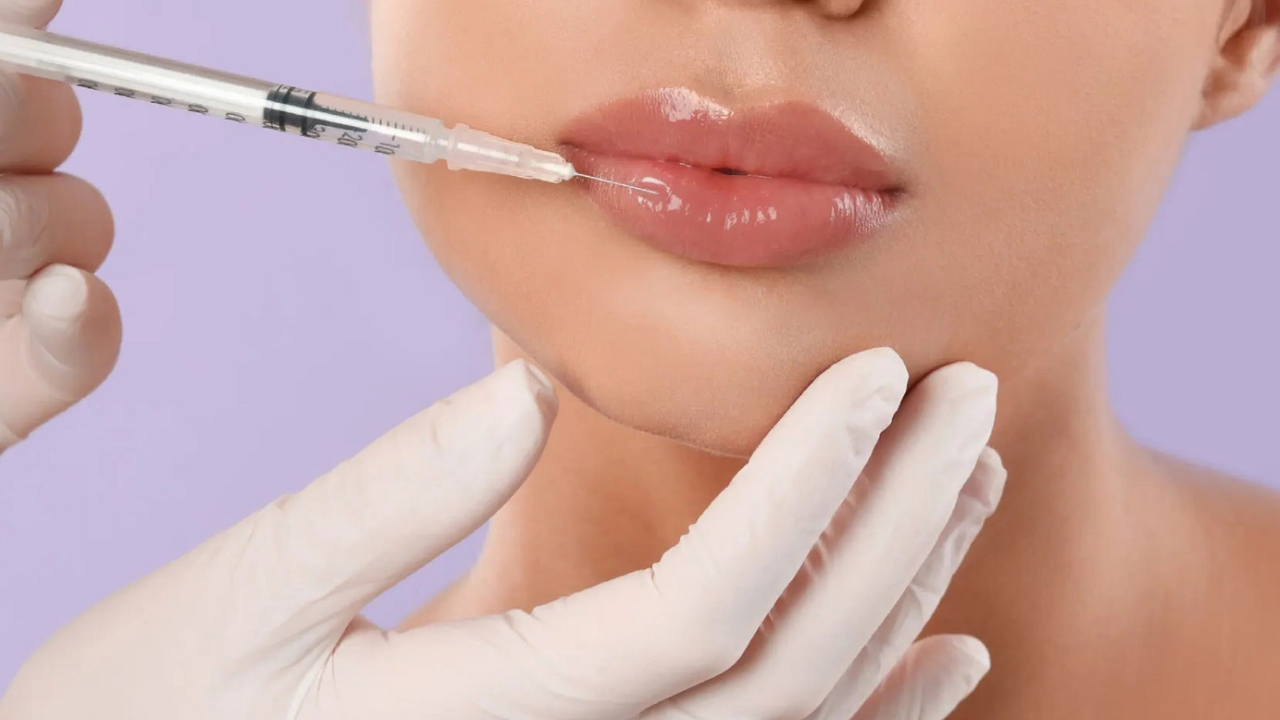
Can All Dermal Fillers Be Dissolved?
One of the most common misconceptions about dermal fillers is that any injectable product can simply be dissolved if a patient dislikes the result.
Whether filler can be dissolved depends primarily on what material was injected.
Hyaluronic acid filler can be degraded using hyaluronidase. Other injectable materials, including calcium hydroxylapatite and poly-L-lactic acid, cannot be dissolved in the same way.
Knowing the exact product used is therefore important before attempting to reverse or manage a previous treatment.
What is hyaluronidase?
Hyaluronidase is an enzyme that degrades hyaluronic acid.
In aesthetic medicine, it can be used to reduce or remove HA filler when clinically appropriate and has an important role in the management of certain HA filler complications.
It is not a universal filler-dissolving agent.
Which fillers can be dissolved?
Hyaluronic acid fillers are the principal filler category that can be degraded with hyaluronidase.
Even among HA fillers, however, formulations vary in crosslinking and other material characteristics, which can influence their response.
The amount, location, depth and time since injection can also affect treatment.
Can lip filler be dissolved?
If the lip filler is made from hyaluronic acid, hyaluronidase can be used to reduce or dissolve it when appropriate.
Early swelling or asymmetry, however, does not automatically mean filler needs to be dissolved.
Normal swelling should generally be allowed to settle unless a complication requires earlier intervention.
Can under-eye filler be dissolved?
HA under-eye filler can be treated with hyaluronidase in selected situations.
Reasons may include unwanted fullness, persistent edema, Tyndall effect or problematic product placement.
Under-eye puffiness can also have causes unrelated to filler, so diagnosis remains important.
Can cheek, chin and jawline filler be dissolved?
Yes, when the injected material is hyaluronic acid.
The decision depends on product, location, amount and the reason treatment is being reversed rather than simply the anatomical area.
Can Sculptra be dissolved?
Sculptra cannot be managed in the same way as HA filler.
It contains poly-L-lactic acid and produces an important part of its aesthetic effect through tissue response and subsequent collagen formation.
Hyaluronidase does not dissolve PLLA.
Appropriate patient selection, preparation, injection technique and placement are therefore particularly important.
Can Radiesse be dissolved?
Radiesse contains calcium hydroxylapatite.
Hyaluronidase does not dissolve CaHA microspheres in the way it degrades hyaluronic acid.
Management of a CaHA-related complication depends on the specific problem, timing and anatomical location.
Can collagen biostimulators be dissolved?
Not in the way HA filler can.
PLLA, CaHA and other biostimulatory materials have different properties.
Part of their clinical effect also comes from the tissue response and new collagen formation rather than simply the continued presence of an injectable gel.
Why might filler need to be dissolved?
Potential reasons include overfilling, asymmetry, unwanted product placement, persistent edema or other product-related concerns.
Hyaluronidase also has an important role in the management of certain HA filler complications.
Dissatisfaction during the first days after treatment, however, is not always an indication for immediate dissolution because swelling can temporarily alter the result.
Does filler migration always require dissolution?
No.
The clinician should first determine whether the appearance actually represents product migration and identify the product and anatomical location.
Apparent migration can sometimes represent accumulated volume, edema or anatomy rather than simple movement of filler from one location to another.
Can filler be dissolved in one session?
Not always.
Some situations may respond to one treatment, while others require additional assessment and treatment.
The objective is not to use the largest possible amount of hyaluronidase but to tailor treatment to the product, anatomical area and clinical problem.
Does hyaluronidase affect the body's natural hyaluronic acid?
Hyaluronidase can also act on naturally occurring hyaluronic acid within tissues.
Endogenous HA is continuously produced and degraded by the body.
This does not mean hyaluronidase should be used indiscriminately. Its indication, dose and placement should be medically justified.
Can someone be allergic to hyaluronidase?
Allergic reactions are possible, although they are not the usual outcome.
Medical history and preparedness to manage a potential reaction are important.
What is the role of hyaluronidase in vascular occlusion?
Suspected HA filler vascular occlusion is very different from elective dissolution of an unwanted cosmetic result.
Vascular compromise requires urgent recognition and management.
Hyaluronidase plays a central role in management protocols for HA-related vascular complications, and prompt treatment is important.
What if I do not know which filler was injected?
The product should not automatically be assumed to be hyaluronic acid.
Obtaining previous treatment records and the product name is useful whenever possible.
In complex cases, high-frequency ultrasound may help identify the location and characteristics of previously injected material and guide management.
Is it always better to dissolve everything and start again?
No.
Complete dissolution is not automatically the objective.
A localized correction may be sufficient in one patient, while more extensive treatment may be appropriate in another.
Management depends on anatomy, product and the specific problem.
The bottom line
Not every dermal filler can be dissolved.
Hyaluronic acid filler can be degraded with hyaluronidase, whereas Sculptra, Radiesse and other materials cannot be reversed in the same way.
Accurate documentation of injected products is therefore extremely important.
Hyaluronidase should also not be considered a casual aesthetic "undo button."
It is a medical treatment with specific indications, dosing considerations and potential adverse effects.
Frequently asked questions
Can lip filler be dissolved?
Yes, when the product is a hyaluronic acid filler.
Can Sculptra be dissolved?
No. Hyaluronidase does not dissolve PLLA.
Can Radiesse be dissolved?
CaHA cannot be dissolved with hyaluronidase in the same way as HA filler.
Is one dissolving session always enough?
No. Treatment requirements depend on the product, amount, location and clinical objective.
Can filler be injected again after dissolution?
It may be possible following appropriate assessment, timing and evaluation of why the previous treatment required reversal.
- The Complete Dermal Filler Guide
- Filler Lumps and Nodules: Causes, Prevention and Treatment
- Swelling After Filler: What Is Normal and When Should You Worry?
- Can Radiesse or Sculptra Be Dissolved?
This content is intended for general medical education and does not provide a filler-dissolving protocol. Hyaluronidase is a medical treatment requiring appropriate assessment of the injected material and clinical problem.